7 Arm Exercises You Can Do With Exactly One Dumbbell
Quick Answer: One dumbbell is enough for a complete arm session if you use unilateral work, tempo, and range of motion to create difficulty instead of load. These seven exercises cover biceps, triceps, forearms, and shoulders, and they scale from a 4kg dumbbell to a 12kg one by changing reps and tempo rather than weight.
Most home arm workouts assume a rack you don’t have. Here are seven that assume one dumbbell and a floor.
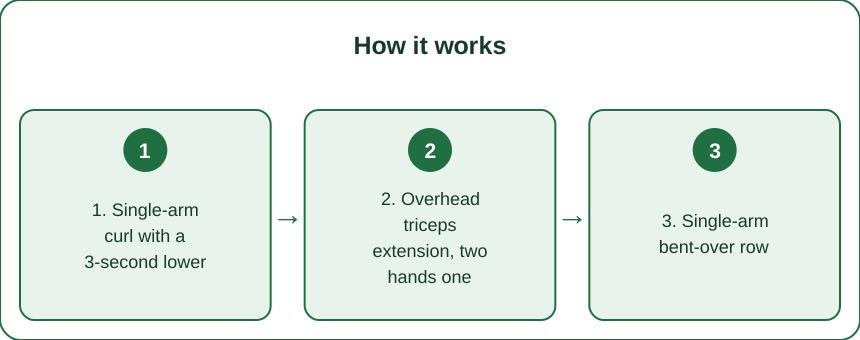
1. Single-arm curl with a 3-second lower
The standard curl, made substantially harder by slowing the eccentric.
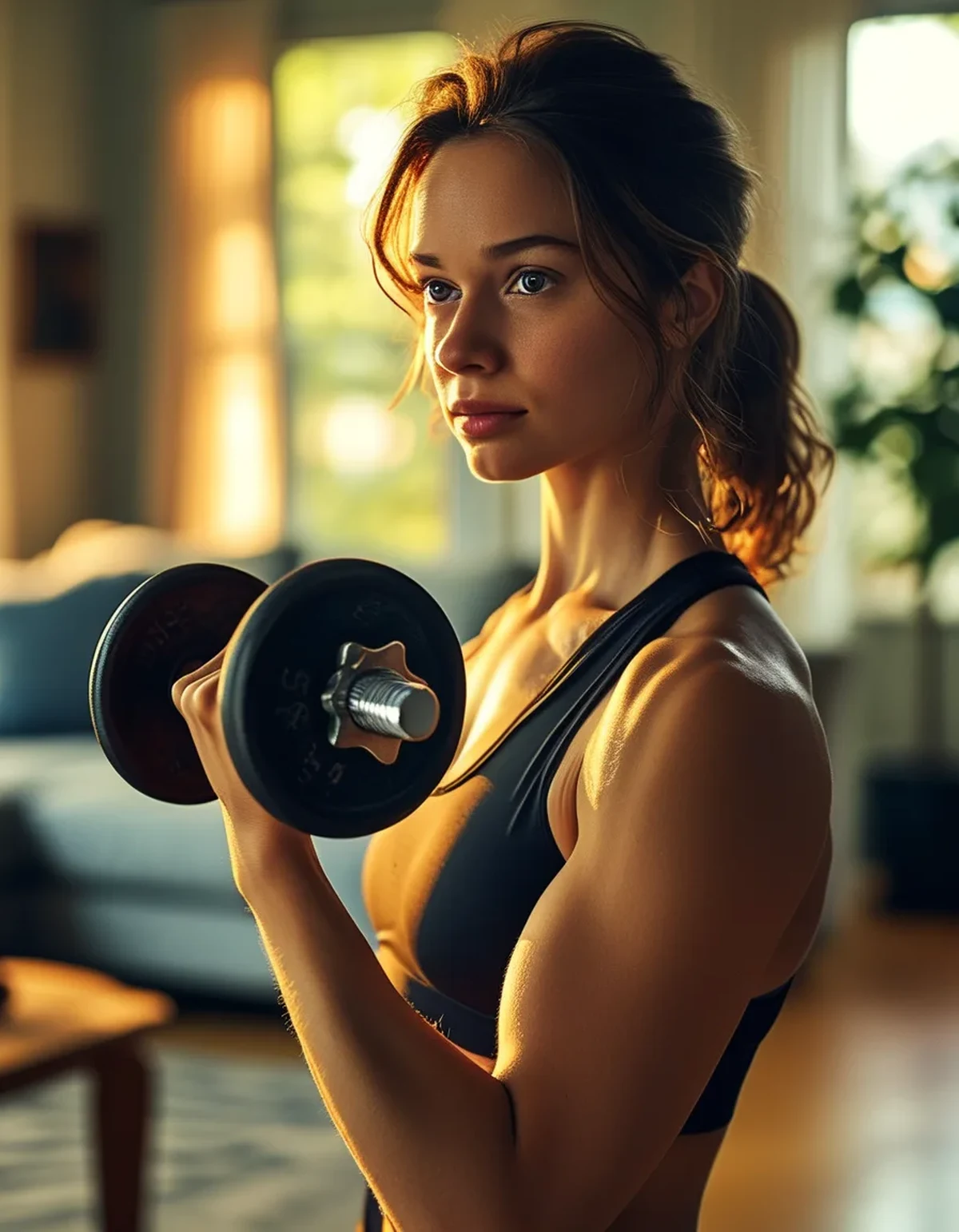
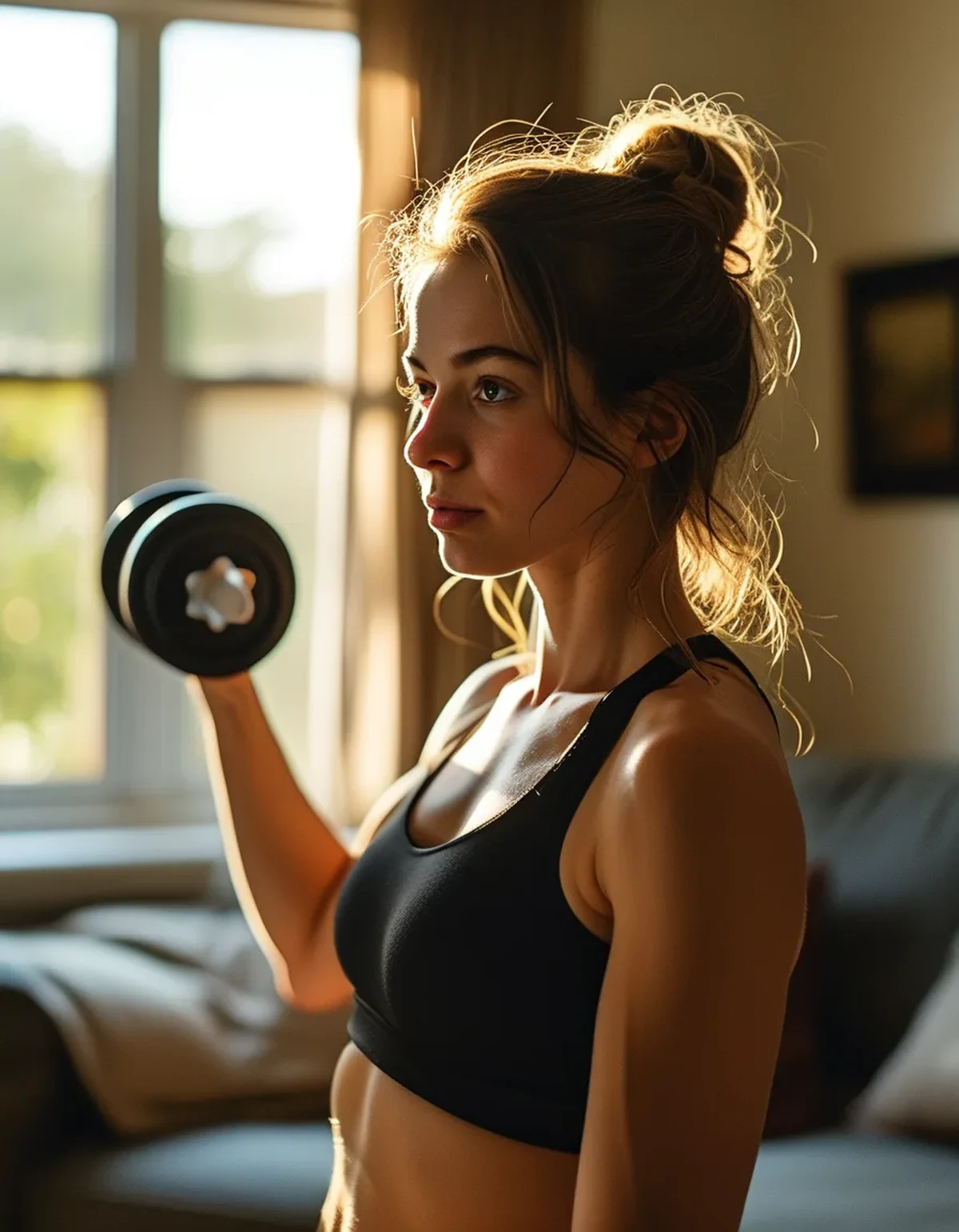
How: stand tall, dumbbell in one hand, palm forward. Curl up in one second, lower over three. Keep your elbow pinned at your side - if it drifts forward, you’re using your shoulder.
Reps: 8-12 per arm, 3 sets.
Why it works with light weight: the lowering phase is where most muscle damage and adaptation stimulus comes from, and a three-second lower roughly triples the time under tension compared to a dropped rep. A 5kg dumbbell curled slowly is meaningfully harder than a 8kg one dropped fast.
The common error: leaning back to start the lift. Brace your midsection and let the arm do it.
2. Overhead triceps extension, two hands one dumbbell
The most effective triceps exercise available with a single weight.
How: hold one end of the dumbbell with both hands, lift overhead, lower behind your head by bending only at the elbows, then extend. Elbows stay pointing forward and close to your head throughout.
Reps: 10-15, 3 sets.
Why it works: the overhead position puts the long head of the triceps in a stretched position, which is where it’s most effectively loaded. This is the part of the triceps that most home routines miss entirely.
The common error: elbows flaring outward, which shifts work away from the triceps. If they flare, reduce the range or use a lighter grip position on the dumbbell.
3. Single-arm bent-over row
Not strictly an arm exercise, and it does more for arm size than most direct arm work.
How: hinge at the hips with a flat back, free hand braced on a chair or your thigh. Row the dumbbell to your hip, elbow driving back rather than out. Pause one second at the top.
Reps: 8-12 per arm, 3 sets.
Why it belongs here: rows load the biceps heavily as a secondary mover while also training the back, and the pulling volume most people lack is a bigger limiter on arm development than curl volume is.
The common error: rotating the torso to complete the rep. Keep your shoulders square to the floor and stop the set when you can’t.
4. Close-grip floor press
A triceps press that needs no bench and no second dumbbell.
How: lie on your back, knees bent, dumbbell held vertically with both hands over your chest. Lower until your upper arms touch the floor, then press up. Elbows stay tucked at roughly 45 degrees, not flared wide.
Reps: 10-15, 3 sets.
Why the floor version: the floor limits the range at the bottom, which protects the shoulder and puts more of the work on the triceps rather than the chest. It’s also the only pressing option available if you don’t own a bench.
The common error: bouncing the elbows off the floor. Touch, pause briefly, then press.
5. Zottman curl
One movement that trains biceps on the way up and forearms on the way down.
How: curl with palm facing up. At the top, rotate your palm to face down. Lower slowly in that pronated position over three seconds. Rotate back at the bottom.
Reps: 8-10 per arm, 2-3 sets.
Why it earns a slot: the pronated lowering loads the brachioradialis and forearm extensors, which are almost never trained directly and contribute noticeably to how a forearm looks and to grip strength.
The common error: rushing the rotation. The turn should happen deliberately at the top, not somewhere on the way down.
6 and 7. Single-arm overhead press, then farmer’s carries
Exercise 6 is the single-arm overhead press - shoulders, and a substantial amount of trunk work as a side effect.
How: dumbbell at shoulder height, press directly overhead until the arm is straight, lower under control. Stand with feet hip width, ribs down, and don’t lean away from the weight.
Reps: 6-10 per arm, 3 sets.
Why unilateral: pressing on one side creates an asymmetric load your midsection has to resist, which is why single-arm overhead pressing is a genuinely effective core exercise disguised as a shoulder one.
The common error: leaning sideways to get the weight up. If you’re bending away from the dumbbell, the weight is too heavy for the pattern - drop the reps, not your form.
Exercise 7 is the farmer’s carry, one side at a time - the finisher, and the one people skip.
How: hold the dumbbell in one hand at your side and walk 25-30 metres - or a set number of laps of a room - standing tall without leaning. Swap sides.
Sets: 3 per side.
Why it finishes the session: it trains grip endurance, forearm strength, and trunk stability all at once, and it’s the closest thing on this list to something you actually do in daily life. Carrying capacity is what most people notice improving first.
The common error: hitching a hip or leaning to counterbalance. Stay stacked and take shorter distances if you can’t.
Session structure: run these as a circuit of exercises 1-6 for three rounds, then finish with the carries. That’s roughly 30-35 minutes and covers every arm muscle group with one weight.
FAQ: One-Dumbbell Arm Training Questions, Answered
What weight should I buy if I only get one?
Something you can press overhead for 6-8 reps but not 15. For many people starting out that’s 6-10kg. An adjustable dumbbell is a better purchase if the budget allows.
Is one dumbbell really enough to build arm strength?
For beginners and intermediates, yes - especially with unilateral work and tempo manipulation. Advanced lifters will outgrow it for pressing before they outgrow it for arms.
How often should I do this session?
Two or three times a week with a day between. Arms recover fast, but the rows and presses involve larger muscle groups that need the gap.
What if the weight is too light for the rows?
Slow the lowering to four seconds, add a two-second pause at the top, and increase the reps to 15-20. If it’s still trivially easy, that’s the point where a second, heavier dumbbell earns its purchase.
TL;DR:
- Seven exercises cover biceps, triceps, forearms, shoulders and grip with one weight
- Create difficulty with tempo, unilateral loading, and range - not more kilos
- The overhead extension and the Zottman curl cover the two regions home routines usually miss
- Rows build arms too; pulling volume is the more common limiter than curl volume
- Circuit exercises 1-6 for three rounds, finish with carries - about 30 minutes
One dumbbell and a floor is not a compromise. It’s just a constraint that forces better technique.
Keep Reading
This article is for general informational and styling purposes only. Fit, sizing, and product availability may vary.