How Often Should You Actually Train Arms for Visible Results?
Quick Answer: 2-3 dedicated arm-focused sessions per week, with at least 48 hours between sessions targeting the same muscles, produces better results than daily arm training — muscles grow during recovery, not during the workout itself.
You’ve been doing arm exercises daily hoping for faster results, and progress has stalled instead. That’s not a coincidence — it’s the most common frequency mistake in arm training specifically.

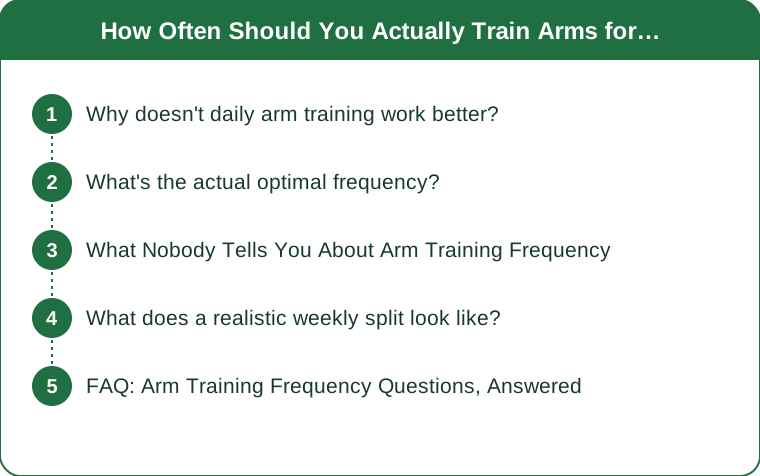
Why doesn’t daily arm training work better?
Muscle growth happens during recovery, not during the workout — training breaks down muscle fibers, and rebuilding (with adequate rest and protein) is what makes them stronger and larger. Train the same muscles again before that rebuild completes, and you’re accumulating fatigue without allowing the adaptation to finish.
Arm muscles (biceps, triceps) are also frequently trained indirectly during other upper-body work (pushing and pulling exercises), so daily direct arm work often means these muscles rarely get true rest — a common reason for stalled visible progress despite high effort.
What’s the actual optimal frequency?
2-3 dedicated sessions per week, with roughly 48 hours of recovery between sessions hitting the same muscle group, is well-supported for building noticeable arm definition over time.
This doesn’t mean total rest on off days — you can still train other muscle groups, or do light, non-fatiguing arm movement — it specifically means avoiding hard, fatiguing arm-focused work on consecutive days for the same muscles.

What Nobody Tells You About Arm Training Frequency
Volume matters more than frequency past a certain point — 2 sessions of 4 sets each roughly matches 4 sessions of 2 sets each in total weekly volume, but the 2-session version allows fuller recovery between sessions, which many people find produces better strength progression with less accumulated fatigue.
Also underrated: indirect volume from compound exercises. If your week already includes pulling exercises (rows, pull-ups) and pushing exercises (push-ups, presses), your arms are getting meaningful indirect work beyond your dedicated sessions — factor that in rather than treating dedicated arm days as the only stimulus.
What does a realistic weekly split look like?
A simple, sustainable structure:
- 2 dedicated arm sessions (e.g., Monday and Thursday), 3-4 exercises each, 3 sets of 10-15 reps
- Rest or other muscle groups on the days between
- Track weight or reps progression every 2 weeks — if you’re not adding either, volume or recovery likely needs adjusting, not just more frequent training
FAQ: Arm Training Frequency Questions, Answered
Can you train arms every day if you use light weights?
Technically you could avoid true fatigue with very light work, but this generally produces slower results than a properly recovered 2-3x/week program with real training stimulus.
How long before I see visible results from a proper frequency?
Most people notice initial strength gains within 3-4 weeks and visible definition changes around 8-12 weeks with consistent 2-3x/week training and adequate nutrition.
Is it bad to train arms two days in a row occasionally?
Occasionally isn’t likely to cause harm, but making it a regular pattern undercuts the recovery window that’s driving most of your actual results.
TL;DR:
- 2-3 dedicated arm sessions/week with 48+ hours recovery beats daily training
- Muscle growth happens during recovery, not during the workout itself
- Indirect volume from pushing/pulling exercises already contributes to arm work
- Track weight/rep progression every 2 weeks to confirm frequency and volume are working
More frequent isn’t more effective here — recovered and consistent beats daily and fatigued.
Keep Reading
This article is for general informational and styling purposes only. Fit, sizing, and product availability may vary.